Launching a creatine powder has arguably never been easier. There are countless manufacturers offering white-label formulations, digital printing has reduced minimum order quantities and new brands can reach consumers through ecommerce channels without requiring significant retail distribution. Creatine gummies are different. Whilst the category is attracting increasing attention, it remains one of the few areas of sports nutrition where product development can still represent a genuine barrier to entry. Taste, texture, dosage and stability all need to be balanced before packaging even enters the conversation.
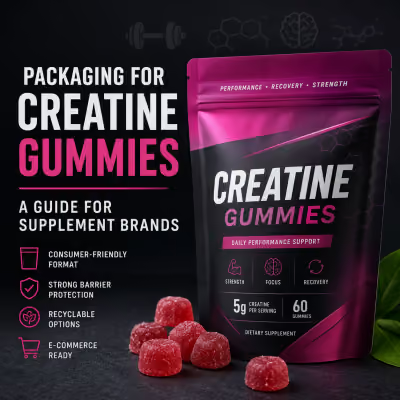
Creatine is hardly a new ingredient. It has been a staple of sports nutrition for decades and remains one of the most researched supplements available.
Creatine was traditionally associated primarily with strength athletes and bodybuilders, yet it is increasingly being discussed in relation to recovery, healthy ageing and cognitive performance, helping it reach consumers who wouldn’t previously have considered using a sports nutrition product.
Podcasts, social media and online health communities have undoubtedly accelerated this trend. Figures such as Joe Rogan regularly discuss creatine as part of a wider conversation around performance, recovery and cognitive function, exposing the ingredient to audiences far beyond traditional gym culture.
At the same time, supplement brands are operating in an increasingly crowded online market. Launching another creatine powder in a white tub is unlikely to attract much attention on its own, particularly when consumers already have countless options available.
As a result, many brands appear to be exploring alternative dosage formats that offer a different consumer experience - gummies are one example of this. Because they emanate confectionary, they are familiar and easy to incorporate into daily routines, particularly for consumers who may have little interest in shaker bottles, scoops and traditional sports nutrition products.
From a brand perspective, gummies also offer something that many powdered supplements struggle to achieve: differentiation. Whilst formulation will always remain important, packaging, format and consumer experience increasingly influence how products are perceived in a crowded market.
One of the reasons gummies remain interesting is that they are often considerably harder to develop than many traditional supplement products.
There are now countless manufacturers offering white-label protein powders, greens powders, pre-workouts and other established formulations. In many cases, a brand can select a formulation, develop its packaging and launch relatively quickly, however creatine gummies products do not necessarily launch as easily.
Consumers are unlikely to tolerate poor taste, an unpleasant texture or serving sizes that feel excessive simply because a product contains creatine. The product still needs to be enjoyable to consume if consumers are expected to purchase it repeatedly.
This may help explain why gummies have not become as crowded as some other areas of sports nutrition despite the growing interest in the format. Developing a product that tastes good, delivers an appropriate serving and remains commercially viable can require considerably more development work than many founders initially anticipate.
This may also help explain why the category has not yet become completely overcrowded. Compared with traditional powders, the barrier to entry remains relatively high because there is simply more product development required before a product is ready for market.
From a packaging perspective, this is often where founders underestimate the complexities of bringing a supplement product to market. Many founders assume that packaging will be the difficult part, however in reality it is formulation, product development and testing frequently that represents the largest challenge.
Similarly, many first-time founders view 1,000 units as a significant commitment. In reality, ingredient suppliers, manufacturers and co-packers often have minimum requirements of their own, meaning packaging is rarely the factor preventing a launch.
Let our team guide you through your customisation options and deliver the perfect pouch for your products.
From a packaging perspective, gcuummies arguably have more in common with confectionery than traditional sports nutrition products. Consumers are already accustomed to purchasing sweets, vitamin gummies and functional snacks in pouches, making flexible packaging feel like a natural fit.
Many of the trends currently influencing sports nutrition packaging have less to do with packaging itself and more to do with changing consumer behaviour. Consumers increasingly expect convenience, portability and formats that fit naturally into everyday life, particularly when products are purchased online rather than through traditional retail channels.
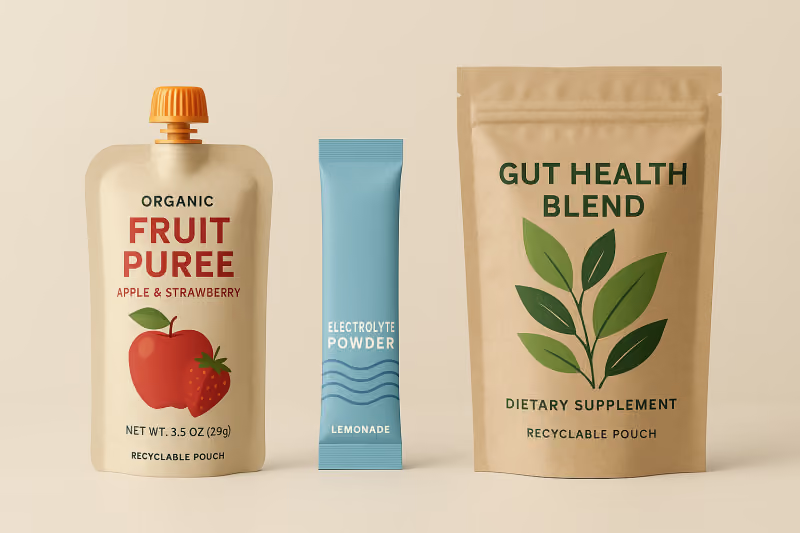
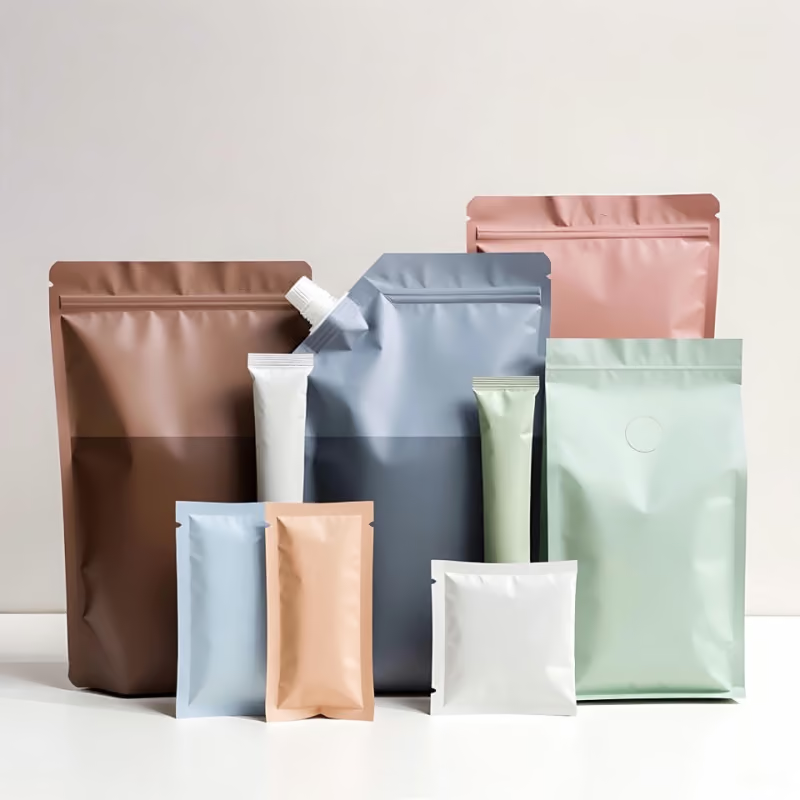
This is one reason why flexible packaging formats used throughout the wider supplement packaging sector continue to gain traction. Stand up pouches offer strong barrier properties, efficient storage and a premium consumer experience without the bulk associated with rigid tubs.
We have explored this shift in more detail in our article examining why supplement brands are moving towards stand up pouches, but many of the same benefits apply to creatine gummies.
For ecommerce-focused brands, pouch packaging can also reduce storage requirements and shipping costs whilst maintaining strong shelf appeal. As brands look for ways to create a more distinctive consumer experience, custom printed pouches are increasingly being considered alongside more traditional rigid packaging formats.
A growing number of supplement founders now begin discussions by asking what recyclable options are available.
Whether that reflects consumer demand, retailer pressure or broader awareness of packaging sustainability is difficult to say, but recyclable packaging is increasingly expected rather than viewed as a premium option. In our experience, it is now relatively unusual for supplement brands not to ask about recyclable packaging at some point during the development process.
The conversation has largely shifted from:
“Do you offer recyclable packaging?”
to:
“Which recyclable structure should I choose?”
For gummies, this often means using mono-material pouch structures that can be recycled through the UK’s Simpler Recycling infrastructure. However, packaging decisions are rarely as simple as selecting the most recyclable option available. Product protection, barrier requirements, shelf life and filling processes all need to be considered alongside sustainability objectives.
The reality is often more nuanced than founders initially expect, particularly when barrier requirements and product protection need to be balanced against recyclability. We explored some of these challenges in our pouch recyclability study article discussing whether pouches are actually recyclable in practice.
The good news is that packaging material technology has moved on considerably in recent years. Pouches that would previously have required more complex laminate structures can increasingly be produced using recyclable alternatives, giving brands more options than were available even a few years ago.
One misconception that appears regularly amongst startup brands is the belief that packaging lead time represents the biggest risk to a launch.
In practice, artwork development, compliance reviews and formulation changes often consume considerably more time than packaging production itself.
It is not unusual for founders to spend days comparing suppliers that are only a week apart on lead time whilst claims, nutrition panels and mandatory information are still being revised. By the time those issues have been resolved, the perceived lead-time advantage often becomes largely irrelevant.
Printed samples are another area where founders can become fixated on the wrong problem. There are circumstances where they make perfect sense, particularly when larger production runs are involved, but they can be disproportionately expensive when starting with an initial order of 1,000 units. Some founders become very focused on obtaining a pouch printed with their own design before committing to production. In reality, reviewing regular pouch samples from a supplier, checking product fit and carefully approving artwork is often enough to move forward without introducing unnecessary cost and delay.
The most successful projects are usually those where manufacturers, co-packers, compliance specialists and packaging suppliers are all working towards the same goal. Building a supply chain that communicates effectively can save considerably more time and stress than simply selecting the cheapest supplier in every category.
This is often overlooked by founders who spend considerable time comparing suppliers and quotations in an effort to save a relatively small amount of money. In practice, strong communication between suppliers will often have a greater impact on the success of a launch than marginal cost differences between quotations.
One of the most common mistakes is leaving compliance until the last minute. Nutrition panels, ingredient lists, dosage instructions, barcodes and mandatory information often take up far more space than founders initially expect, particularly on smaller packs. It is often tempting to include every possible claim, ingredient benefit and piece of supporting information, but smaller pouch formats have limited space. One of the most common challenges is balancing compliance requirements with readability.
Barcodes are another common issue. Many founders underestimate how much space they require or reduce them below recommended dimensions in an attempt to create more room for branding and product information. The situation is also evolving, with traditional barcodes expected to be gradually replaced by next-generation QR codes as part of the GS1 Sunrise 2027 initiative. Whilst conventional barcodes are unlikely to disappear overnight, brands launching products today should be aware that packaging requirements are likely to change over the coming years.
Artwork preparation can also create problems.
Professional packaging artwork is typically prepared in Adobe Illustrator using the correct print specifications, colour profiles and production layers. Attempting to build commercial packaging using Canva templates, AI-generated graphics or RGB colour settings can create avoidable issues later in production.
Proofreading deserves more attention than it often receives too. Designers play a critical role in developing packaging, but they are not usually responsible for checking compliance information, product claims or ingredient data. Ultimately, that responsibility remains with the brand.
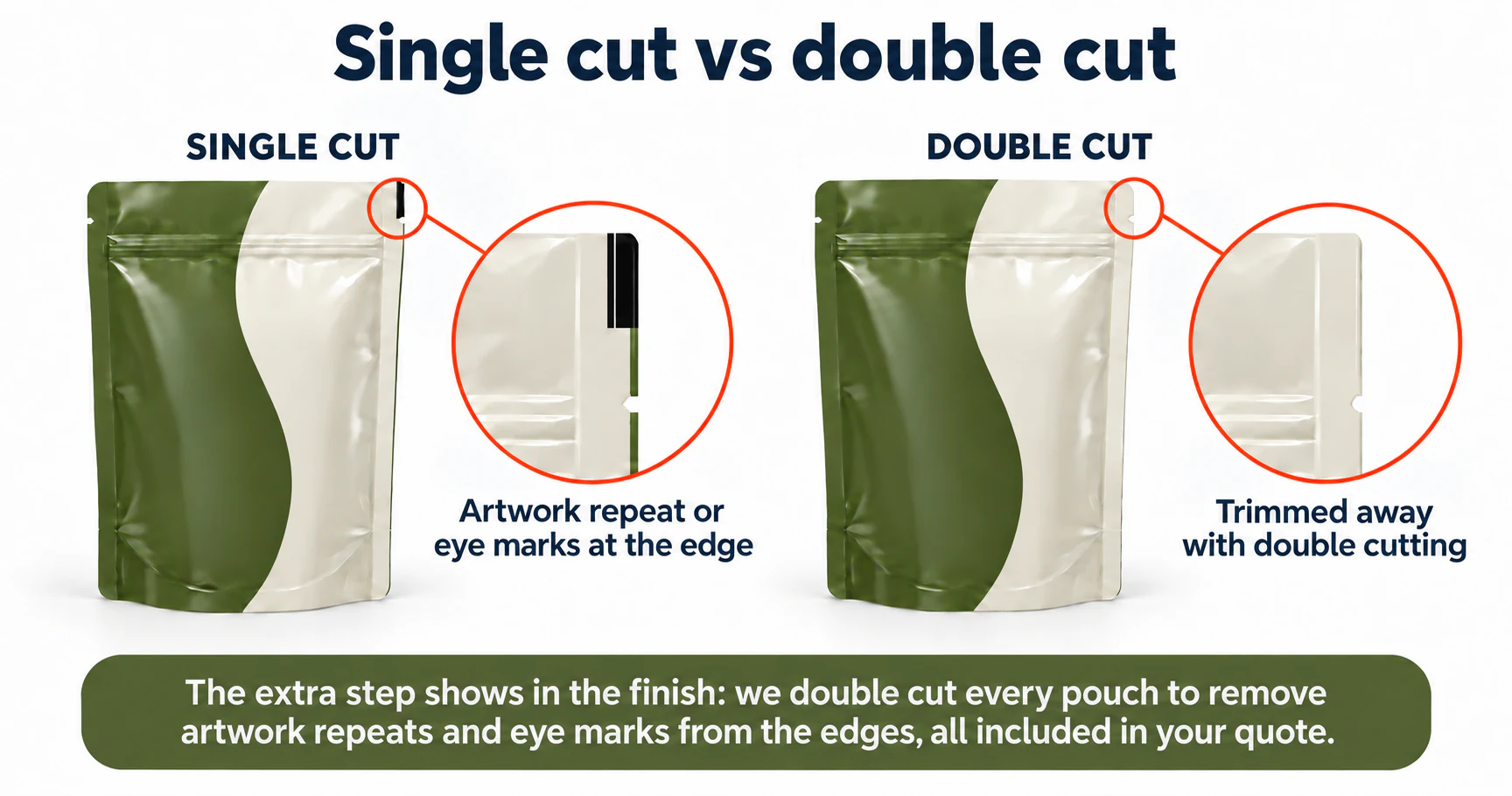
There are also production details that many founders are unaware of because they are rarely discussed during the early stages of a project. Some pouch manufacturers use a single-cut process that requires a quiet zone around the edge of the artwork, whilst others use double-cutting techniques that allow complex designs to extend to the edge of the pack.
Most consumers will never consciously notice these differences, but they often contribute to whether packaging feels polished and premium once it reaches the shelf.
Creatine gummies are generating increasing interest from supplement brands, but they are often more complicated to bring to market than founders initially expect. Whilst packaging plays an important role, the biggest challenges are frequently product development, compliance and building a commercially viable business around the product itself.
From a packaging perspective, pouches are often a natural fit for gummies, offering convenience, strong barrier performance and ecommerce-friendly logistics. As the category continues to evolve, the brands most likely to succeed are unlikely to be those with the shortest lead times or lowest packaging costs, but those that focus on developing products consumers genuinely enjoy using and building supply chains capable of supporting long-term growth.
If you have any enquiries concerning our pouch packaging, or would simply like to get in touch with our team, you can use the contact form or details below.