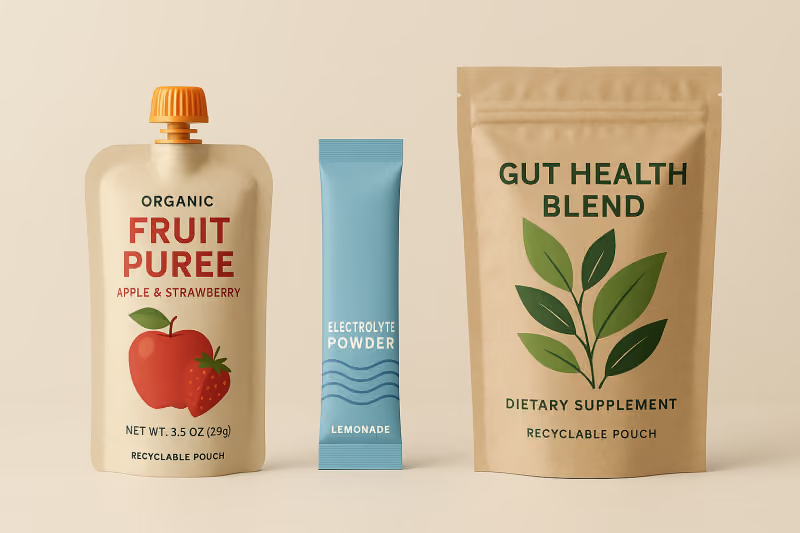
Pouch packaging is a form of flexible packaging made from laminated films such as PET, PE or PP, designed to protect products while keeping weight and material use low. It includes formats like stand-up pouches, flat pouches, sachets and spouted versions, all of which can be filled, sealed and customised to suit different products. Because the material structure is flexible rather than rigid, these packs are easier to store, cheaper to transport and can offer strong barrier performance for food, supplements, liquids and household goods. Modern pouch packaging has evolved from a simple plastic bag into a highly engineered format used across almost every consumer category. It can be printed directly, specified with different barriers, and produced as recyclable mono-material structures as the UK and EU introduce kerbside recycling for flexible plastics.
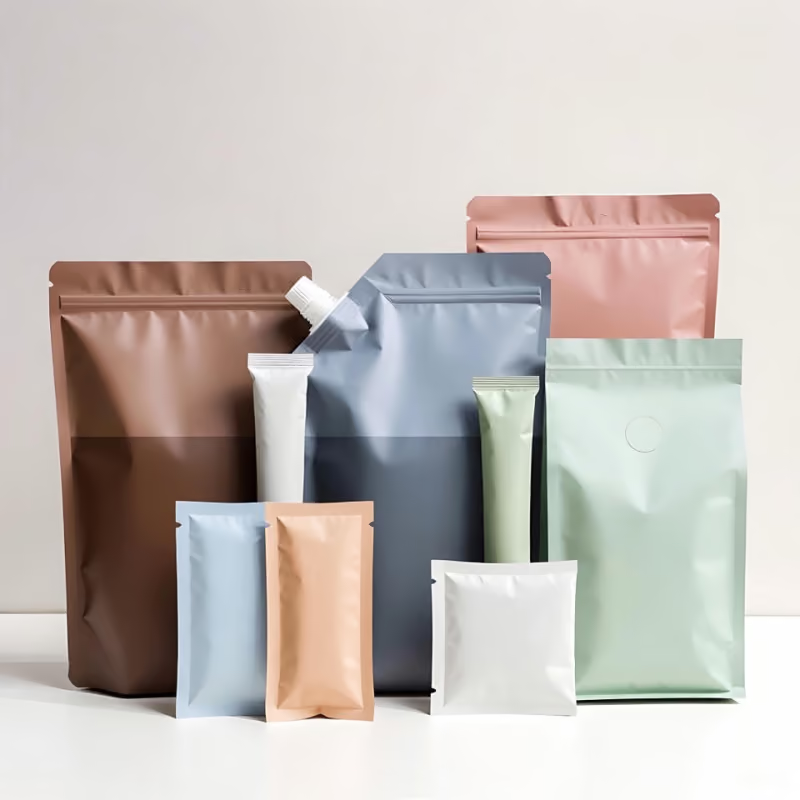
Pouch packaging has become one of the most widely adopted flexible formats across food, supplements, pet products and personal care. It started as a simple alternative to jars and tins, but the format has expanded into a full family of bags — stand-up pouches, flat pouch bags, doypacks, sachets and spouted packs — each solving slightly different problems for brands.
The appeal is straightforward: pouches are light, efficient, easy to store and far more adaptable than rigid packaging. With the UK and EU preparing to bring flexible plastics into kerbside recycling in 2027, many companies are now modernising their packaging by switching to mono-material pouch formats.
Pouch packaging is used across almost every consumer category because it adapts well to dry goods, liquids, powders and gels. The structure can be tailored to give the right barrier, shape and opening style, which is why brands increasingly rely on it for both everyday items and higher-value products.
Cereals, grains, snacks, spices, confectionery, dried fruit and ready-to-mix products are often supplied in stand-up pouch formats, mainly because they display well in retail fixtures, ship efficiently and hold their shape once filled.
Supplements and sports nutrition brands use pouch formats for proteins, vitamins, functional blends and adaptogens. The packs suit both small trial sizes and larger refill formats, and mono-material structures help reduce overall packaging weight while still giving the oxygen and moisture protection needed for shelf life.
Oils, cocktails, juices, sauces and purées are often supplied in spout pouches, which provide controlled dispensing and reduce breakage compared with glass. They’re also popular with DTC brands due to their reduced shipping weight.
Dry kibble, air-dried treats and powdered supplements benefit from resealable features that keep products fresh once opened. The films used are moisture resistant, helping preserve aroma and flavour.
Home and personal care brands often use pouches for detergent refills, shampoos, fabric conditioners and skincare. The lighter format cuts material use, supports concentrated formulas and gives brands more control over dosing. It’s also well suited to emerging refill-at-home systems.
Fishing bait, gardening supplies, DIY fixings and small hardware items are often supplied in pouches because the format is durable, protective and simple to display, whether on hooks or shelves.
Because pouch materials can be specified at different barrier levels, the format works for both everyday goods and premium, design-led products. Its versatility is one of the main reasons it has overtaken many rigid alternatives.
The rapid adoption of pouch packaging isn’t driven by aesthetics alone. The format solves practical issues across filling, storage, transport and end-user handling — often at a lower environmental cost than rigid packaging.
Pouches ship flat, take up minimal storage and reduce wasted air during transport. This helps compress logistics costs and reduces warehouse footprint.
Compared with glass jars, tins or rigid plastics, flexible pouches use far less raw material. This reduces transport emissions and often lowers a brand’s total packaging cost over a product’s lifetime.
Sizes, shapes, finishes and closures can be adapted for each SKU. Features like windows, tear notches, zips, spouts and euro slots can be added without redesigning the entire material structure.
Digital and gravure technology allow brands to print straight onto the laminate without labels or sleeves. The choice depends on run size and artwork requirements; more detail is available in our guide comparing digital and gravure printing processes.
The packaging format can work for a 35 ml liquid sachet or a 2 kg bulk refill. Brands often use one packaging family across multiple SKUs for consistency.
Pouches use fewer resources and ship more efficiently, which lowers their carbon footprint compared to many rigid formats. Modern mono-PE and mono-PP versions have been designed to align with upcoming UK kerbside recycling systems.
Multi-layer films provide tailored barriers against moisture, oxygen, aroma loss and contamination. Heat seals or resealable features maintain product integrity through storage, transport and home use.
The shape of a pouch supports a high product-to-packaging ratio. They run reliably on both manual and automated filling lines, and the side gussets expand cleanly, reducing waste during filling.
Laminated structures resist denting, scuffing and tearing. Pouches maintain their printed finish during transport and customer handling.
Stand-up bags work well on shelves. Flat pouches and sachets can be hung or boxed. Clear-front or windowed designs help customers assess the product at a glance.
Laminate choices include aluminium, metallised films, kraft, clear films, matt varnish and high-gloss coatings, giving brands the flexibility to match product category and visual identity.
There is no single pouch suitable for all products, so the category includes several established formats:
The correct pouch specification depends on:
Spouts typically suit liquids; tear notches are common in sachets; resealable zips help preserve products such as nuts, baits, granules or powders. If you’re unsure, our team can advise based on your product and supply chain.
Sustainability is now a major consideration for most brands, and pouch formats fit well with that shift. The environmental benefit comes mainly from weight and material efficiency. A pouch uses far less plastic than a rigid tub or jar and needs much less fuel to move through the supply chain, which is why LCAs consistently show flexible packaging outperforming heavier alternatives on carbon impact.
The materials are also changing. Older mixed laminates are slowly being replaced with simpler mono-PE or mono-PP structures that are compatible with the UK’s upcoming kerbside recycling changes. Once Simpler Recycling is fully in place in 2027, flexible plastics such as modern pouch laminates will be collected with household waste rather than relying on drop-off points. That gives brands a practical route towards circularity without compromising barrier performance.
It’s worth remembering that plastic itself isn’t the issue — the problem has always been the system around it. As collection and sorting improve, recyclable pouch formats offer a low-impact option that still protects products properly.
More detail on the environmental performance of different materials, including LCAs and the limitations of compostables and paper laminates, is available in our sustainability section.
Let our team guide you through your customisation options and deliver the perfect pouch for your products.
If you have any enquiries concerning our pouch packaging, or would simply like to get in touch with our team, you can use the contact form or details below.