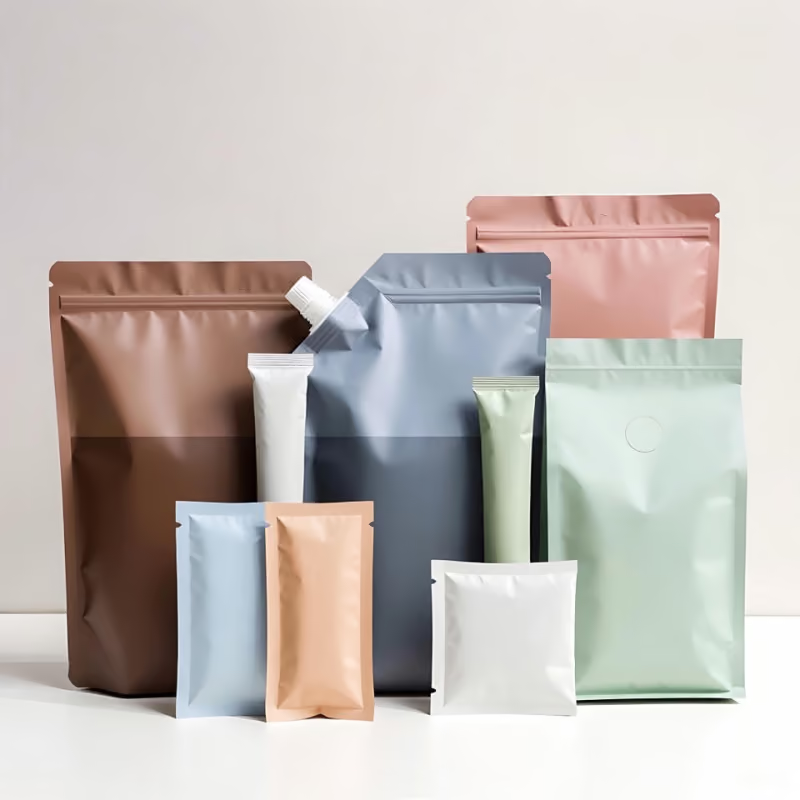
Eco friendly pouches are now everywhere, but the terminology is often more confusing than helpful. Biodegradable, compostable, recyclable, paper-based, plastic-free and mono-material all sound like the perfect solution, but the reality is that this topic is very nuanced. When considering which pouches to choose it’s important to realise that regardless of sustainability messaging, a pouch still needs to protect your product, survive the supply chain and have a realistic end-of-life route.
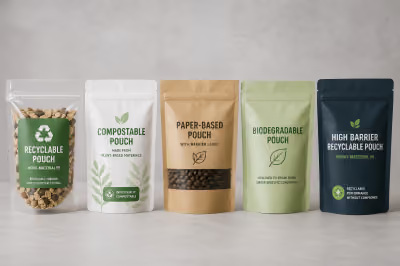
In this blog, we cut through some of the common misconceptions around biodegradable pouches, compostable pouches, paper-based pouches and recyclable pouches, so you can make a decision based on how the packaging actually works in practice.
Companies that claim their pouches are biodegradable are often not telling the full story.
In some cases, biodegradable plastic claims have historically been linked to additives that help plastic break down more quickly. These are often referred to as oxo-degradable plastics. The issue is that breaking plastic into smaller pieces is not the same as it safely returning to nature.
For a pouch to be genuinely biodegradable, it should break down under clearly defined conditions, within a realistic timeframe, and without leaving harmful residues behind. That is a much higher bar than simply using the word “biodegradable” in a marketing claim.
At SPS Pouches, we advise customers to be cautious around biodegradable pouches unless there is clear, credible information explaining the material, the conditions required for degradation and what happens at end of life.
Responsible sustainable packaging should be based on evidence, not vague terminology.
Many compostable pouches are made from bioplastics such as PLA.
Despite sometimes being described as “plastic-free”, bioplastics are still plastics. That does not mean they are always a bad option, but it does mean they should not be treated as a straightforward environmental solution in all scenarios. PLA often has weaker barrier properties than conventional plastic laminates and this can make it unsuitable for products that need protection from moisture, oxygen, grease or aroma loss.
The other issue is end of life. Most compostable packaging is designed for industrial composting and is usually assessed against standards such as BS EN13432. That does not mean it will break down in a residential compost heap.
Home compostability certifications such as OK compost HOME are often cited, but real-world conditions vary massively. Not every household has a compost heap, and even where they do temperature, moisture and management of the heap will all affect degradation rates and results. This makes it difficult to prove what will actually happen in practice.
Food waste collections are not a guaranteed answer either as there is still mixed messaging over whether compostable packaging should go into food waste bins, and some composting facilities do not want this material because of potential contamination and processing concerns which reduce the value of the compost.
That does not mean compostable plastics have no place - they can work well in closed-loop environments such as festivals, events or hospitality sites, where compostable packaging and food waste can be collected together in bulk and be sent to the right facility.
For most retail products, however, compostable pouches need careful consideration. A pouch still has to protect the product through filling, transport, storage and months on a shelf, so compostable should not automatically be assumed to mean more sustainable.
Let our team guide you through your customisation options and deliver the perfect pouch for your products.
Kraft paper has a natural appearance and it certainly looks and feels more eco-friendly than plastic, however it usually still needs a plastic film layer to provide seal strength, moisture resistance, grease resistance and product protection. This means they are rarely just paper, even when they look and feel like paper on the outside.
According to OPRL guidance, paper packaging with less than 15% plastic by weight can be recycled at home, however in practice it can be difficult to achieve this with a functional pouch. Once features such as a zipper or grip seal are added, the plastic content can easily move above that 15% threshold.
There is also the issue of pEPR fees. Even if a paper-based pouch managed to sit below the 15% plastic threshold for OPRL home recycling, it would almost certainly still contain more than 5% plastic by weight. That means the recyclate material likely to fall into the fibre-based composite category under pEPR, which attracts a higher fee than both paper and plastic.
This is the awkward bit. A pouch may look like paper, and may even meet certain recyclability guidance, but it is still not clean paper and it becomes a mixed material that is more expensive in fee terms, and less attractive for recyclers to process at end of life.
Another factor to consider is packaging weight. Life cycle assessment studies often show flexible plastic performing well against paper because it is much lighter and uses less material to achieve the same packaging function. Paper may look more eco-friendly, but if it needs to be thicker, heavier, or combined with coatings and plastic layers to protect the product properly, the environmental benefit becomes far less obvious.
So while paper may look more eco-friendly, it does not always mean it is the better environmental option. For many products, a recyclable mono-material plastic pouch may offer a more practical route than a paper-based pouch that is difficult to recycle and has limited value at end of life.
Historically, many stand up pouches were made from mixed laminates, often combining PET, PE, aluminium, nylon or other layers to achieve print quality, stiffness, puncture resistance, barrier performance and shelf life. The issue is that these materials belong in different recycling streams, making them far harder to recycle once laminated together.
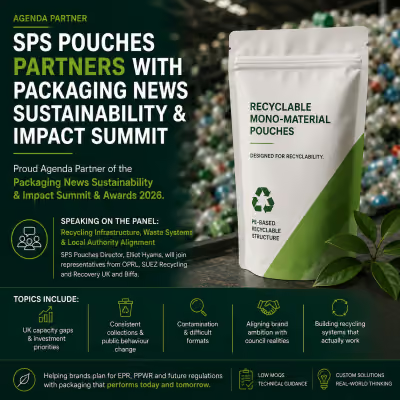
This is why the industry has moved towards mono-material pouch packaging, particularly mono-PE and mono-PP structures. These are designed to stay within the same polymer family, improving the chances of the pouch being correctly identified, sorted and reprocessed through mechanical recycling.
This matters because UK recycling infrastructure is now changing. Flexible plastic packaging is due to be collected from households in England from 2027 under Simpler Recycling, but collection is only the first step. The material still needs to be sorted, recycled and turned into something saleable for the recyclers.
A recent pouch recyclability trial carried out by SPS Pouches at Sherbourne Recycling showed encouraging results for PE-based pouch structures. Our mono-PE pouch structure was correctly identified and sorted into the films and flexibles stream, which suggests that well-designed recyclable pouches can move through modern UK sorting infrastructure.
The testing also showed why design still matters. Metallic finishes, aluminium layers, spouts, caps and other features can all affect how a pouch behaves during sorting. So while mono-material pouches are a major step forward, they still need to be specified properly for the product and the likely end-of-life route.
At SPS Pouches, we offer recyclable pouch options including mono-material PE and PP structures where suitable. They are not the right answer for every product, but they are often the most practical route for brands that want to improve packaging sustainability without compromising product protection.
Choosing eco friendly pouches is not as simple as picking the material that sounds the most sustainable. The right pouch needs to protect your product, suit your filling process, meet your shelf-life requirements and have a credible end-of-life route.
At SPS Pouches, we help brands compare recyclable, compostable, paper-based and high-barrier pouch options so they can make a practical decision rather than relying on vague sustainability claims.
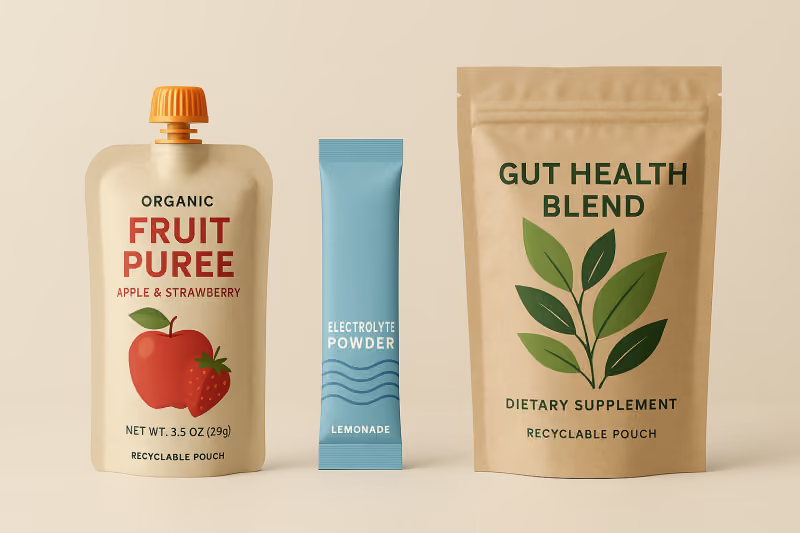
We can supply a wide range of eco-friendly pouch packaging, including:
Our pouches can be customised by size, material structure, thickness, finish, print method and features such as zips, valves, tear notches, windows and spouts. This means you can improve the sustainability profile of your packaging without losing the functionality your product needs
Eco-friendly material structures are not suitable for all products and we will always give an honest view of what is realistic: a recyclable mono-material pouch may be the best option for one product, while another may still require a higher barrier laminate to undergo extreme conditions such as autoclaving or retorting.
If you are looking for eco friendly pouches that are commercially practical as well as sustainable, get in touch with SPS Pouches and we can help you choose the right packaging for your brand.
If you have any enquiries concerning our pouch packaging, or would simply like to get in touch with our team, you can use the contact form or details below.