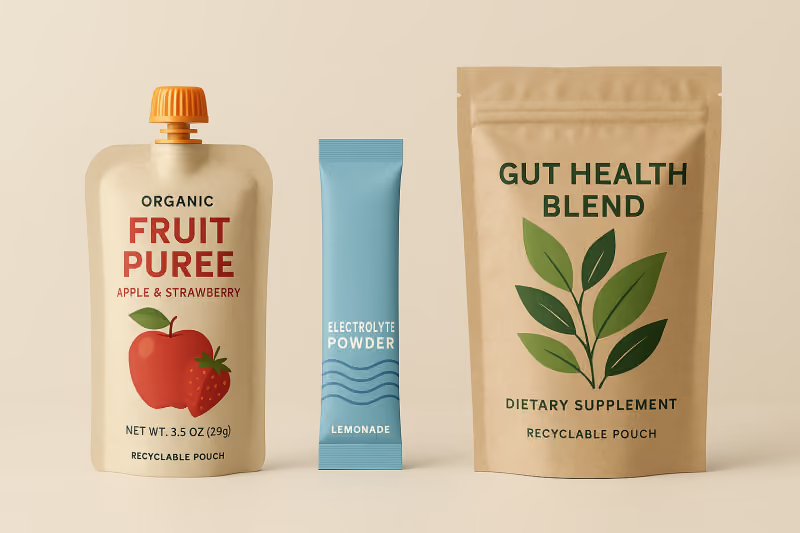
The flexible packaging industry is increasingly adopting mono-material and other recyclable solutions to improve the end of life of custom pouches. This shift is largely driven by full value chain consortiums, which aim to make recyclate material more valuable for recyclers. By producing a more homogeneous recycled output the logic is that this will increase the value of recycled materials, which in turn will encourage the recycling of flexible packaging.
While many pouches are often marketed as ‘recyclable,’ they often aren’t processed in kerbside recycling programs in the UK. This is due to limited collection of flexible packaging by local authorities, even though the materials can usually be recycled in reality. As a result, consumers take them to large store drop-off points or participate in specialist recycling schemes like Terracycle.
The industry has continuously innovated, making mono-material structures more versatile and suitable for a wide range of products and industries. The success of these efforts now hinges on investment in recycling at scale. To fund this change the UK government has introduced taxes on plastic importers and manufacturers, with both the Plastic Packaging Tax and pEPR now in effect. It is vital that the funds raised are ringfenced for flexible packaging recycling, as well as the development of regulations to ensure that businesses are adhering to sustainable practices.
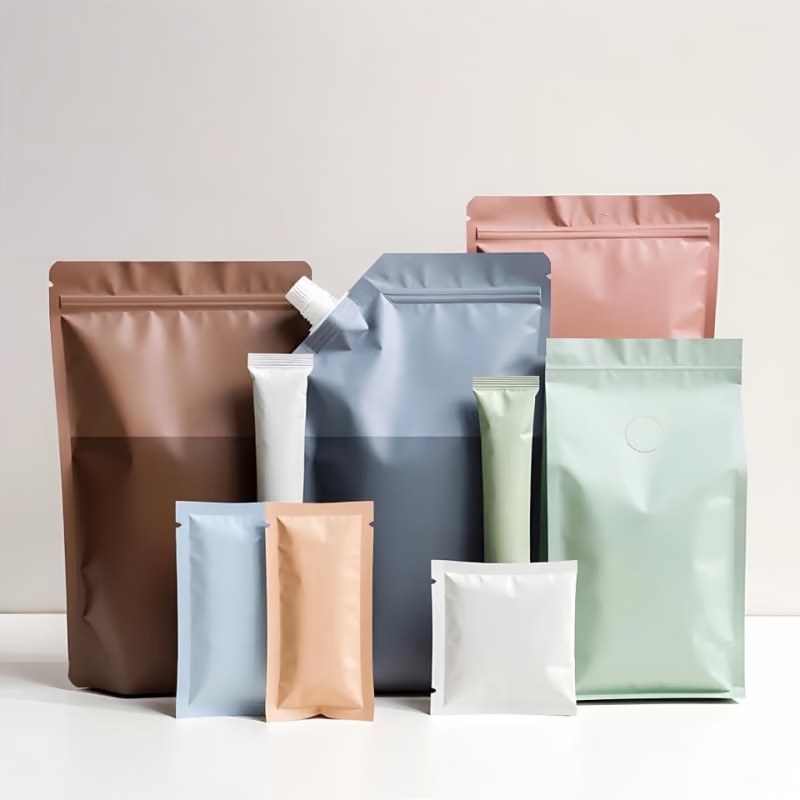
Let our team guide you through your customisation options and deliver the perfect pouch for your products.
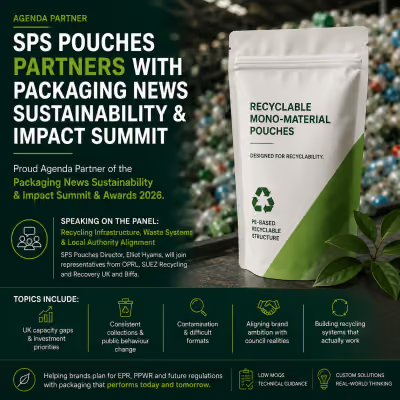
Pouches that are 'designed for recyclability' are usually made from a single type of plastic, usually polyethylene (PE) or polypropylene (PP).
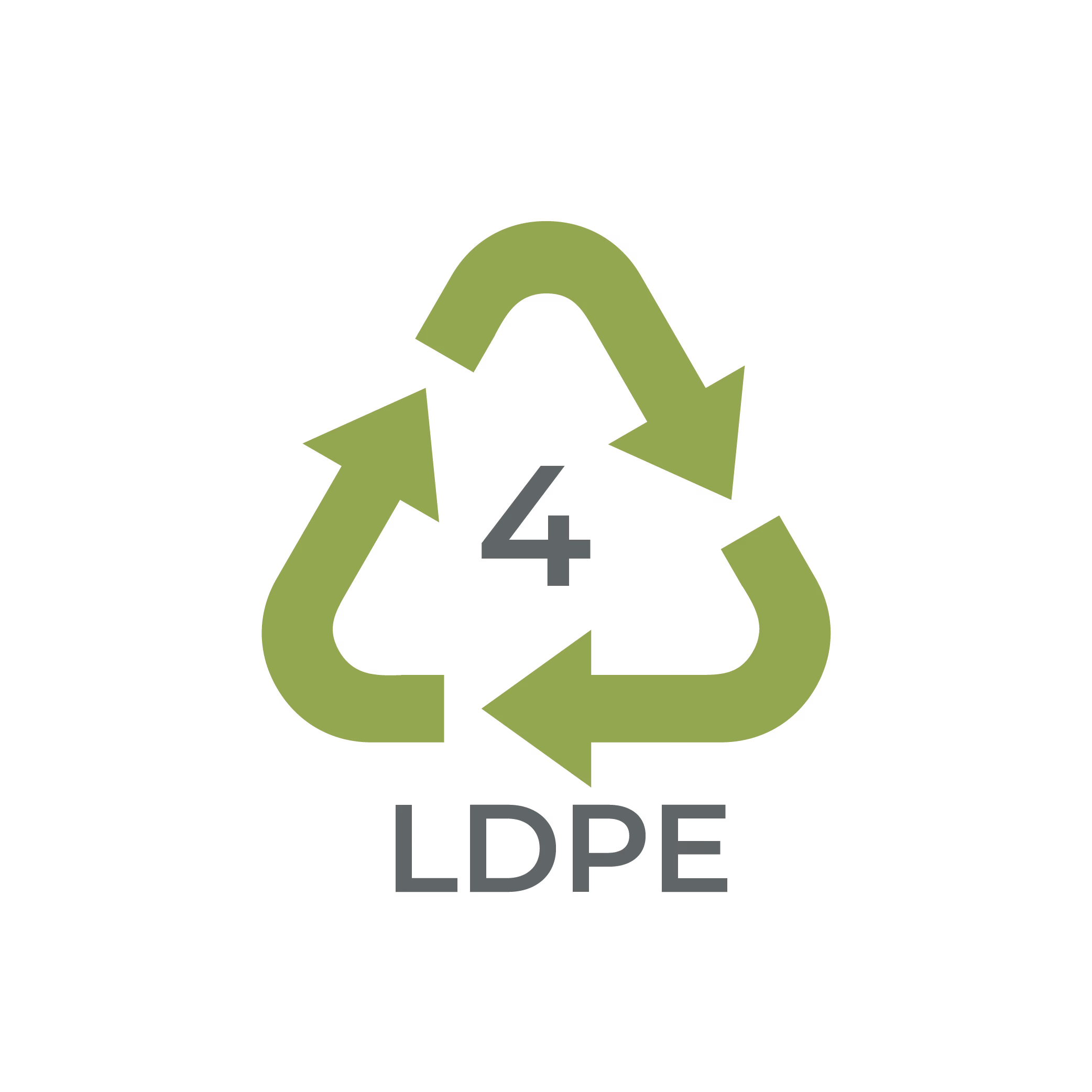
Mono-material structures include BOPP/CPP, BOPP/MetIOMDO PE/PE, BOPE/PE, and HDPE/PE, which each offering different aesthetic, performance and barrier properties. These pouches are often identified by the recycling logo featuring the number 4 or 2, indicating they are made from LDPE (Low-Density Polyethylene) or Polypropylene. Mixed-laminate pouches are marked with the number 7, as governed by Resin Identification Codes (RICs).
The packaging industry has achieved continuous innovation in this area, meaning mono-material structures are more versatile and suitable for a wide range of products than they have ever been. With the introduction of taxes on plastic importers and manufacturers which are targetted to fund the necessary recycling infrastructure we are actively pushing for the funds to be used for scaling up the recycling of flexible packaging and ensuring businesses adhere to sustainable practices.
The implemention of kerbside recycling regulations has been delayed due to ongoing discussions between the packaging industry and Defra. These discussions focus on aligning definitions for multi-laminates within the Simpler Recycling framework and ensuring consistency with the upcoming packaging Extended Producer Responsibility (pEPR) regulations. It is understood from industry experts that pEPR funds will now be allocated to local authorities to pay for more collections, not for wider recycling infrastructure as originally anticipated. While a conclusion was expected by now, we are still awaiting the final outcome.
Significant strides are being made to advance kerbside recycling in the UK. The Simpler Recycling Scheme, launched in 2021, is leading efforts to improve recycling rates for flexible packaging such as pouches after a successful Flexconnect trial in seven local authorities. The scheme is due to be rolled out nationwide in spring 2027.
To prepare for the new scheme, in March 2026 SPS Pouches conducted a pouch recyclability study to ensure that our pouches are suitable for the new recycling scheme. The study conducted at Sherbourne MRF showed that sortability is highly structure-dependent with Mono-PE formats performing best.
MDOPE with EVOH / LDPE sorted cleanly into the films and flexibles stream, whilst heavy metallisation caused clear problems, with a fully metallic PET / Alu / LDPE pouch failing outright. Interestingly some mixed laminates still sorted well, but that does not guarantee a high-quality recyclate at the end of the process. The overall conclusion supported that simpler PE-led pouch designs currently offer the most credible route to improved sustainability outcomes.
While there is excitement around the development of mono-material pouches for their recyclability, many brands continue to favor paper-based pouches for their perceived environmental benefits and aesthetic appeal.
Currently, kraft pouches with less than 15% plastic are considered 'kerbside recyclable' by OPRL. Pouches with higher plastic content can still be recycled at large supermarkets or store drop-off points along with other forms of multilaminate flexible packaging such as crisps packets and microwaveable bags. The 15% plastic content limit for kerbside recycling of mixed paper/plastic pouches is currently under review with the Confederation of Paper Industries (CPI), with an anticipated reduction to 10% in the near future.
Interestingly, it is thought that paper packaging containing more than 5% plastic content by weight will classified as 'fibre-based composite' at end of life, which is anticipated will attract higher pEPR fees that both plastic and paper respectively.
We are dedicated to keeping you informed about the latest innovations and developments in packaging design and understand the importance of maintaining packaging quality whilst you transition to eco-friendly solutions. That’s why we’ve invested in developing industry-leading recyclable pouches that meet the highest standards of sustainability and performance.
If you need any further information on this topic, we are here to support you with the latest industry insights and government regulations. Contact us today and take the next step in your journey toward a more sustainable future.
If you have any enquiries concerning our pouch packaging, or would simply like to get in touch with our team, you can use the contact form or details below.