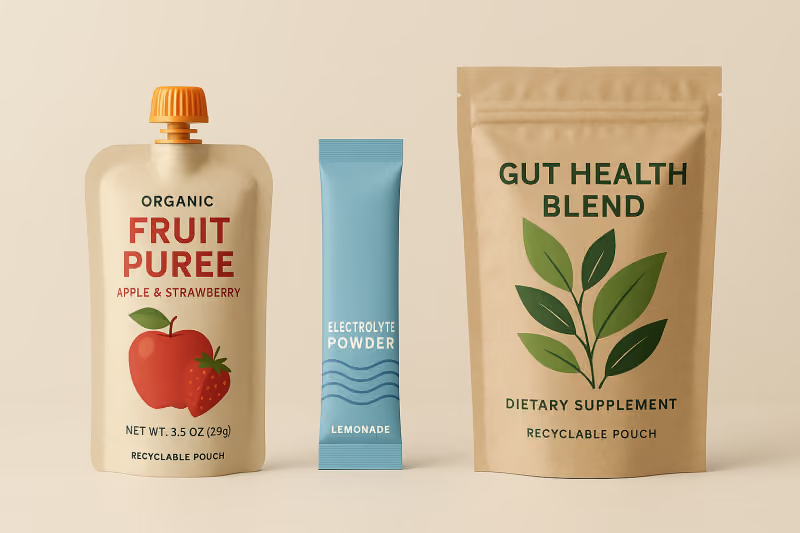
Choosing packaging for beauty and cosmetic products is easy to get wrong because prioritising visual appeal does not always mean the end result will be practical. Packaging is often the first part of the product a customer judges. The finish, colours, print quality and feel of the pack all affect whether the product looks premium, natural, clinical, affordable or eco-friendly. It’s important to also consider that cosmetic packaging has to protect the formulation, prevent leaks, survive transport, provide enough space for ingredients and usage information and suit the way the customer actually uses the product when they receive it. A pouch, sachet, bottle, jar or tube can look perfect in a mock-up and still fail completely once it is filled or in transit to the end user.

Good cosmetic packaging needs to balance three things: presentation, protection and practicality.
Presentation matters because beauty is a visual category. Protection matters because formulations can be sensitive to moisture, oxygen, light, oils, fragrance loss or contamination. Practicality matters because the customer still needs to open, squeeze, pour, reseal, store or dispose of the pack easily.
A pouch for bath salts has a very different job to a pouch for body wash. One may mainly need moisture resistance and a resealable zip. The other may need a spout, stronger seals, drop resistance and a structure suitable for liquid products.
This is why cosmetic packaging should be chosen around the product, not the other way around.
The biggest mistake is choosing the pack before the product is ready.
This happens because packaging makes a beauty brand feel real. Once the pouch or sachet is designed, the product suddenly looks like something that can be sold. The problem is that packaging decisions made too early often become expensive later.
Common mistakes include:
There are plenty of cosmetic packaging formats available: bottles, jars, tubes, sachets, cartons, pouches and refill packs. None of them are universally right.
Flexible packaging is useful for many growing beauty brands because it is lightweight, customisable and often more practical for smaller runs, samples, refills, seasonal products and e-commerce.
Typical flexible packaging formats include:
The packaging format should be dictated by the product. For example a powder does not need the same structure as a liquid refill and a thick face cream will not dispense in the same way as a shower gel.
Cosmetic products can be awkward to pack and it's important to consider how the product will behave with different material structures.
Some are water-based, some are oil-based and some contain alcohol, surfactants, fragrances, active ingredients, colourants, salts, clays or powders. Products may be sensitive to oxygen or moisture and will need specific barrier properties to protect them from spoilage.
Bath salts need moisture protection, liquid refills need strong seals and drop performance, gels need a format that works with the way the product moves and oils and strongly coloured products may need compatibility testing to make sure the material does not stain, weaken or fail.
This is where samples and filling tests are worth the effort. A pouch may look right, but if the product leaks, stains the material, weakens the seal or will not dispense properly, it is not the right packaging.
Face masks are one of the most obvious uses for flexible packaging in beauty.
Single-use sheet masks are usually packed in flat pouches or sachets because they are lightweight, printable and easy to distribute. Clay masks, powder masks and multi-use products may work better in stand up pouches, especially where a resealable zip is useful.
The key issues are barrier protection, seal strength and product format.
Wet masks need packaging that can hold liquid content without leaking. Powdered masks need moisture protection to prevent clumping. Clay-based products may need stronger material, depending on the fill weight and how the product is handled.
There also needs to be enough space for ingredients, directions, warnings and claims to be printed on the packaging. Small sachets can look neat, but they quickly become difficult if the artwork has to carry too much information.
Body wash, shampoo, conditioner, hand wash and liquid soap refills are increasingly being packed in spout pouches.
This can make a lot of sense. Refill pouches are lightweight, compact and can use less material than many rigid bottles. They also allow customers to refill containers at home rather than buying a new bottle every time.
However, liquid refill packaging needs to be specified properly.
A spout pouch for body wash or shampoo needs strong seals, puncture resistance and good drop performance. The spout and cap need to suit the viscosity of the product. The pouch also needs to survive transport, especially if it is being sold online.
A liquid refill pouch is not just a stand up pouch with a spout attached, it is a functional pack that needs to be tested around the product.
Tanning products can be difficult because they often contain oils, colourants, fragrances and active ingredients.
The main risks are staining, leakage, material compatibility and messy dispensing. If the product is thick, the opening needs to allow customers to use it without frustration. If the product contains strong colours or oils, the material and seal areas should be tested before committing to a full order.
Spout pouches, sachets and smaller flexible packs can work well for samples, travel sizes and refill formats, but they need to feel clean and reliable. Customers are putting the product directly on their skin, so flimsy or messy packaging damages trust quickly.
Most moisturisers are still packed in jars, tubes or bottles. That does not mean flexible packaging has no role.
Sachets are useful for skincare samples because they let customers try a product before buying the full-size version. Refill pouches can also work where the brand already uses a rigid primary container and wants to reduce packaging weight for repeat purchases.
The challenge is viscosity and compatibility.
Thick creams may not work well in every pouch format. Oils, fragrances and active ingredients can also affect the material choice. For premium skincare, the packaging also needs to feel intentional. A refill pouch can work well, but it should feel like part of a considered refill system rather than a cheaper substitute.
Cosmetic gels vary too much for there to be one simple packaging answer.
A thin shower gel and a thick hair styling gel behave very differently. Flow rate, squeezing pressure, residue, seal strength and customer usability all matter.
Sachets can work for samples and single-use products. Spout pouches can work for refill applications. Stand up pouches may work for some thicker formulations, depending on how the product is intended to be dispensed.
This is a good example of why testing matters. The word “gel” does not tell you enough about the packaging needed.
Flexible packaging will not replace every form of makeup packaging. Compacts, palettes, sticks and tubes all have their place.
Where pouches and sachets can be useful is in samples, powders, wipes, refills, applicator packs and promotional kits. For these applications, print quality and finish matter because the pack still needs to reflect the brand.
Digital printing can be useful for smaller runs, multiple SKUs, seasonal launches, influencer campaigns and product testing. For larger volumes, other print methods may be more cost-effective.
The pack still needs to do its job. Powders need moisture protection. Cream products need compatibility checks. Samples need to open cleanly without creating a poor customer experience.
Let our team guide you through your customisation options and deliver the perfect pouch for your products.
Sustainability matters in beauty, but it is also an area full of vague claims.
Customers want brands to reduce unnecessary packaging and move away from wasteful formats. At the same time, cosmetic packaging still has to protect the product. If the pack fails and the product is wasted, the environmental outcome is usually worse.
Flexible packaging can be a good option because it is lightweight and material efficient. Refill pouches can also reduce reliance on rigid packaging where the customer already has a bottle, jar or dispenser at home.
However, not every pouch is automatically eco-friendly.
Mixed laminates can be difficult to recycle. Paper-look packaging may still contain plastic layers. Compostable packaging may not have a realistic composting route. Recyclable mono-material pouches can be a good option for some products, but they are not suitable for every formulation.
The sensible approach is to choose the lowest-impact packaging that still protects the product properly.
For some cosmetic products, that may be a recyclable mono-material pouch. For others, a higher barrier laminate may still be needed to prevent leaks, degradation or product waste. For more information check out our guide on eco-friendly pouches.
Custom printed pouches give beauty brands a lot of flexibility, especially when launching new products or testing demand.
Digital printing is useful for start-ups and growing brands because it can allow shorter runs, multiple designs and faster testing. This is particularly helpful for:
For higher volumes, gravure or other print methods may become more cost-effective. The right option depends on quantity, artwork, lead time, budget and material choice.
The main point is to think about packaging printing methods early on when designing your packaging. It affects cost, minimum order quantity, finish, lead time and sometimes which material structures are available.
Before ordering cosmetic packaging, get clear on the basics:
These questions sound basic, but they prevent expensive mistakes.
Cosmetic packaging is not just about looking good. It needs to protect the product, work through the supply chain and make sense for the customer. For many beauty brands, flexible packaging can be a practical option, especially for refills, samples, masks, powders, salts and products where lightweight packaging is useful. The best packaging choice depends on the product, so get the functionality right first, then build the design, sustainability and branding around it.
SPS Pouches supplies custom printed flexible packaging for beauty and cosmetic brands across a wide range of product types.
We can help with stand up pouches, spout pouches, flat pouches, sachets, refill pouches and high-barrier pouch structures, depending on the product and application.
Our pouch packaging can be customised by size, material, print finish, thickness and features such as zips, spouts, tear notches, valves and windows. We can also advise on recyclable mono-material structures where suitable.
We work with growing brands that need practical packaging support, not just a product catalogue. If a material is not right for your formulation, we will say so. If a pouch needs testing before ordering, we will recommend it. If a more sustainable structure is possible without compromising the product, we will help you explore it.
Whether you are launching face masks, bath salts, body wash refills, tanning lotion, moisturiser samples, cosmetic gels or other beauty products, we can help you choose pouch packaging that fits your product and your brand.
If you have any enquiries concerning our pouch packaging, or would simply like to get in touch with our team, you can use the contact form or details below.