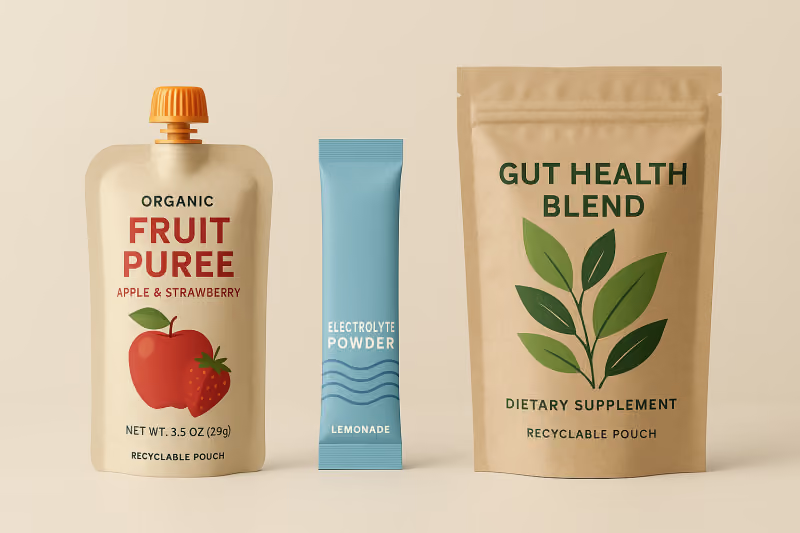
Supplement packaging has been fairly predictable for many years with protein powders being packed into tubs, capsules into bottles and most brands copying whatever the larger players in the market were already doing. That model still exists, but it is becoming increasingly inefficient for many ecommerce-focused supplement brands. Packaging decisions are now tied to fulfilment, storage, shipping, pEPR, recyclability claims and SKU flexibility. Brands are no longer just choosing what looks best on shelf — they are choosing what works operationally once products start moving at scale. This is one of the main reasons stand up pouch packaging continues to grow within the supplements industry. Not because pouches are new or revolutionary. Consumers already accept them and challenger brands have proved they work commercially. The real shift is that pouches solve several business problems at the same time.
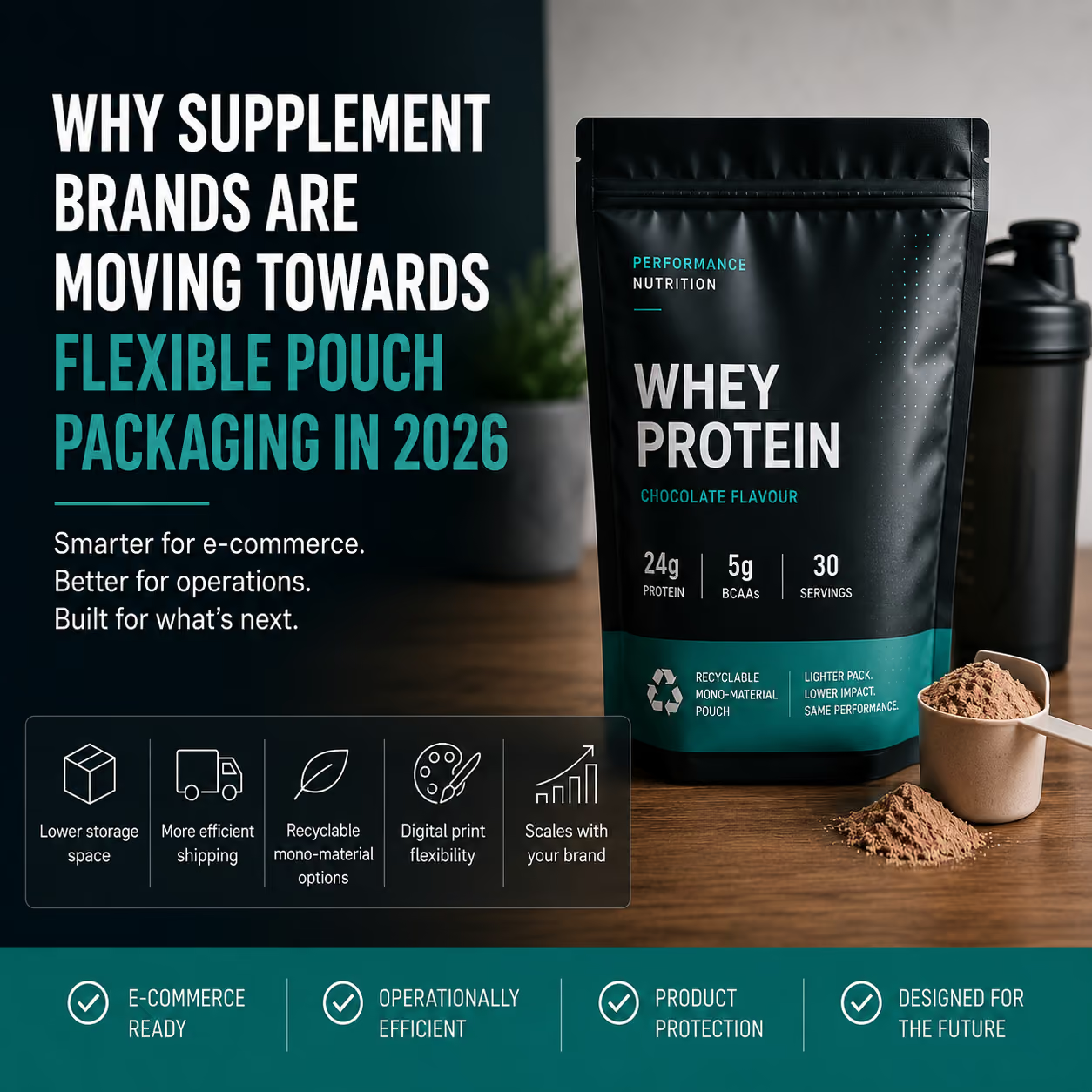
When starting a supplements business a lot of founders get bogged down speaking to multiple packaging suppliers about unit cost, MOQs and fixed pouch sizes before they have even finalised formulations, artwork or fulfilment.
Packaging development is rarely that straightforward.
A “250g pouch” means very little without understanding the product itself. Is the powder dense like creatine or light like greens blends? The same pouch may work perfectly for one formulation and poorly for another.
This is why packaging discussions often end up involving the supplement manufacturer or co-packer as much as the brand itself.
In practice, founders usually benefit far more from finding a pouch supplier that understands the process properly than saving a small amount on unit cost while creating problems elsewhere.
A lot of the real delays happen later anyway:
Packaging often gets blamed for problems that started much earlier in the process.
Rigid tubs still have a place and there are reasonable arguments on both sides when it comes to sustainability, convenience and consumer perception.
The issue is operational efficiency.
A rigid tub takes up space before it is filled, takes up space after filling and increases parcel size during ecommerce fulfilment. Empty tubs also consume significantly more warehouse space compared with flat-packed flexible pouches.
This becomes more noticeable as volumes increase.
There is also the issue of headspace. Many supplement tubs are substantially larger than the amount of product they actually contain. Some of this is necessary for filling and scoop access, but it also creates inefficient use of storage and shipping space.
Stand up pouches solve a lot of these issues naturally.
They are lighter, compact to store and more efficient to ship. For ecommerce brands especially, those advantages become increasingly difficult to ignore.
A lot of sustainable packaging discussions focus entirely on recyclability claims while largely ignoring packaging weight.
That is starting to change.
Under pEPR, packaging weight is likely to become a much bigger commercial consideration over the next few years. Lightweight flexible packaging may not just become a sustainability decision — it may become a cost-management decision.
For supplement brands selling online, lighter packaging can reduce:
That does not automatically make pouches “better” than rigid packaging, but it does explain why lightweighting is becoming increasingly important commercially.
The flexible packaging industry has made significant progress on improving recyclability over the last decade.
Mono-material PE pouch structures incorporating EVOH barrier layers are now proving to be capable of delivering barrier performance, whilst remaining compatible with emerging flexible plastic recycling streams.
Importantly, these materials are now being tested within real infrastructure rather than just theoretical lab conditions.
As discussed in our recent pouch recyclability study, mono-material PE pouches were tested within a UK Material Recovery Facility (MRF) to assess sortability performance within live systems ahead of kerbside flexible plastic collections under Simpler Recycling.
The results were encouraging, but there are still trade-offs.
A lot of premium supplement brands currently rely heavily on metallisation because it creates strong shelf impact and premium aesthetics. The problem is that heavy metallisation, particularly aluminium-heavy structures, is likely to become increasingly problematic under the UK Government’s recyclability assessment methodology (RAM) and the EU PPWR legislation which the UK is expected to align with over the coming years
Our testing also showed that heavy metallisation created sortability issues.
This is probably where the market is heading over the next few years. Pouches are not disappearing, but overly complex structures and “looks sustainable” claims are likely to come under much more scrutiny.
Recycled content is another area where reality is more complicated than the marketing.
Mechanically recycled plastic remains difficult to source and incompatible with food-contact applications under current regulations, meaning chemically recycled material is likely to become increasingly important. At the same time, there is still limited recycled material available within the UK, creating obvious questions around imported PCR supply, traceability and certification standards.
The reality is that every packaging material category still has infrastructure problems. Flexible packaging is not unique in that respect.
Let our team guide you through your customisation options and deliver the perfect pouch for your products.
A lot of founders assume gravure printing is the “proper” option because unit costs reduce significantly at scale.
In practice, gravure tends to suit brands that are confident they can consistently move large volumes of the same artwork without changing formulations, ingredients or branding.
That stability often takes years to achieve.
Supplement formulations are regularly tweaked, compliance wording changes and brands pivot constantly once products launch. Ordering huge volumes of packaging too early can create unnecessary risk.
Digital printing is often the more sensible route initially because it allows:
Most growing brands still aim to move into gravure eventually, but digital allows packaging to evolve alongside the business rather than forcing the business to commit too early.
The reality is there is a lot of nuance when deciding between digital or gravure printing, so it's best to work with a packaging supplier that can advise you based on your specific requirements.
Ecommerce supplement packaging needs to work operationally, not just visually.
The packaging needs to survive courier networks, store efficiently and remain practical once it arrives with the customer. Stand up pouches often work well because they reduce empty space, lower shipping weight and improve storage efficiency throughout the supply chain.
This becomes increasingly relevant for:
A lot of supplement brands are now experimenting with reusable rigid containers paired with refill pouches to reduce packaging weight over time.
Whether refill models become mainstream remains to be seen, but the wider direction is fairly obvious. Packaging is becoming lighter, more flexible and decisions are being operationally driven.
The next five years are unlikely to be defined by some completely new packaging format.
Pouches are already accepted by consumers, ecommerce strongly favours them and challenger brands continue to use them because they work.
The bigger shift will be around how pouch structures are assessed.
RAM, pEPR and Simpler Recycling are all going to create more scrutiny around recyclability claims, material choices and packaging weight. Metallised structures are likely to become increasingly difficult to justify from a recyclability perspective, which may force designers to rethink how they create shelf impact.
The likely outcome is not fewer pouches, but simpler pouch structures.
More focus on:
The industry has already spent the best part of a decade moving in this direction through initiatives such as CEFLEX and wider design-for-recycling guidance. The difference now is that regulation and collection infrastructure are finally starting to catch up.
The stand up pouch packaging industry continues to grow in the supplement space because it solves several practical problems at once.
It reduces storage and fulfilment inefficiencies, supports ecommerce, allows lower MOQ launches and increasingly provides a realistic route towards recyclable flexible packaging structures.
That does not mean pouches are automatically the correct choice for every supplement product. There will always be trade-offs between barrier performance, branding, recyclability and operational efficiency.
The important thing is understanding those trade-offs properly rather than choosing packaging based purely on trends or marketing language.
If you have any enquiries concerning our pouch packaging, or would simply like to get in touch with our team, you can use the contact form or details below.